

Copper Sulfate: Properties, Uses, Applications, and Global Market Overview
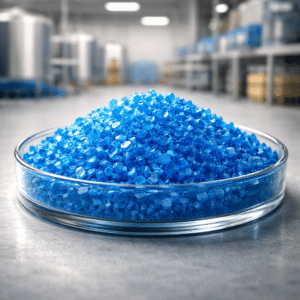
Copper Sulfate, also known as Copper(II) Sulfate, is a widely used inorganic chemical compound with the chemical formula CuSO₄. Recognized for its distinctive blue crystalline appearance, copper sulfate plays a vital role across agriculture, mining, water treatment, chemical manufacturing, and laboratory applications. Due to its versatility, effectiveness, and cost efficiency, copper sulfate remains one of the most demanded copper salts in global industrial and agricultural markets.
What Is Copper Sulfate?
Copper sulfate is an odorless, crystalline compound that is most commonly available as copper sulfate pentahydrate (CuSO₄·5H₂O). It dissolves readily in water, forming a blue solution with strong fungicidal, bactericidal, and algicidal properties. Anhydrous copper sulfate exists as a white or pale gray powder but is less common in commercial applications.
This compound is valued not only for its chemical reactivity but also for its stability during storage and transportation when properly packaged.
Key Physical and Chemical Properties
Copper sulfate exhibits several important characteristics that make it suitable for industrial and agricultural use:
-
Appearance: Blue crystalline powder or granules
-
Molecular Weight: 249.68 g/mol (pentahydrate)
-
Solubility: Highly soluble in water
-
pH (aqueous solution): Slightly acidic
-
Stability: Stable under normal storage conditions
-
Shelf Life: Long shelf life when kept dry and sealed
These properties allow copper sulfate to perform reliably in diverse environmental and processing conditions.
Major Applications of Copper Sulfate
1. Agriculture and Farming
One of the largest uses of copper sulfate is in agriculture. It is widely applied as a fungicide, herbicide, and micronutrient supplement. Copper sulfate is an essential ingredient in Bordeaux mixture, a traditional and effective fungicide used to protect crops against fungal and bacterial diseases.
Farmers also use copper sulfate to correct copper deficiencies in soil and animal feed, improving crop yield and livestock health.
2. Mining and Metallurgy
In mining operations, copper sulfate is used in froth flotation processes to separate valuable minerals from ores, particularly in the extraction of zinc and other non-ferrous metals. Its ability to activate mineral surfaces makes it indispensable in mineral processing plants.
3. Water Treatment and Algae Control
Copper sulfate is commonly applied in water treatment systems to control algae growth in reservoirs, ponds, swimming pools, and industrial water circuits. Its effectiveness at low concentrations makes it a preferred solution for maintaining clean water systems without excessive chemical dosing.
4. Chemical and Industrial Manufacturing
In the chemical industry, copper sulfate serves as a raw material and catalyst in the production of pigments, dyes, preservatives, and other copper compounds. It is also used in electroplating, textile processing, wood preservation, and leather treatment.
5. Laboratory and Educational Use
Copper sulfate is a standard reagent in laboratories for chemical analysis, educational experiments, and demonstrations. Its vivid color and predictable reactions make it ideal for teaching crystallization, hydration, and redox reactions.
Packaging and Industrial Supply Formats
Copper sulfate is typically supplied in 25 kg woven polypropylene bags with inner liners, 50 kg bags, or bulk jumbo bags, depending on customer requirements. For export markets, moisture-resistant packaging and palletized loading ensure product stability during long-distance shipping.
Proper labeling, safety data sheets (MSDS), and certificates of analysis (COA) are commonly provided to meet international trade and regulatory requirements.
Safety, Handling, and Storage
While copper sulfate is highly effective, it must be handled responsibly. Direct contact with skin or inhalation of dust should be avoided. Personal protective equipment such as gloves and masks is recommended during handling.
Storage should be in a cool, dry, and well-ventilated area, away from incompatible substances and food products. When used according to guidelines, copper sulfate is safe and environmentally manageable.
Global Demand and Market Outlook
The global demand for copper sulfate continues to grow, driven by expanding agricultural activities, increasing water treatment needs, and rising mineral processing operations. Developing regions, in particular, are witnessing strong demand due to agricultural modernization and infrastructure development.
With its wide range of applications and consistent performance, copper sulfate remains a key commodity in the international chemical trade.
Conclusion
Copper sulfate is a versatile, reliable, and economically valuable chemical compound with applications spanning agriculture, mining, water treatment, and industrial manufacturing. Its proven effectiveness, ease of handling, and broad market demand make it an essential product for global supply chains.
For buyers seeking a dependable chemical solution with multi-industry relevance, copper sulfate stands out as a trusted choice for both industrial and agricultural applications.


There are no reviews yet.